
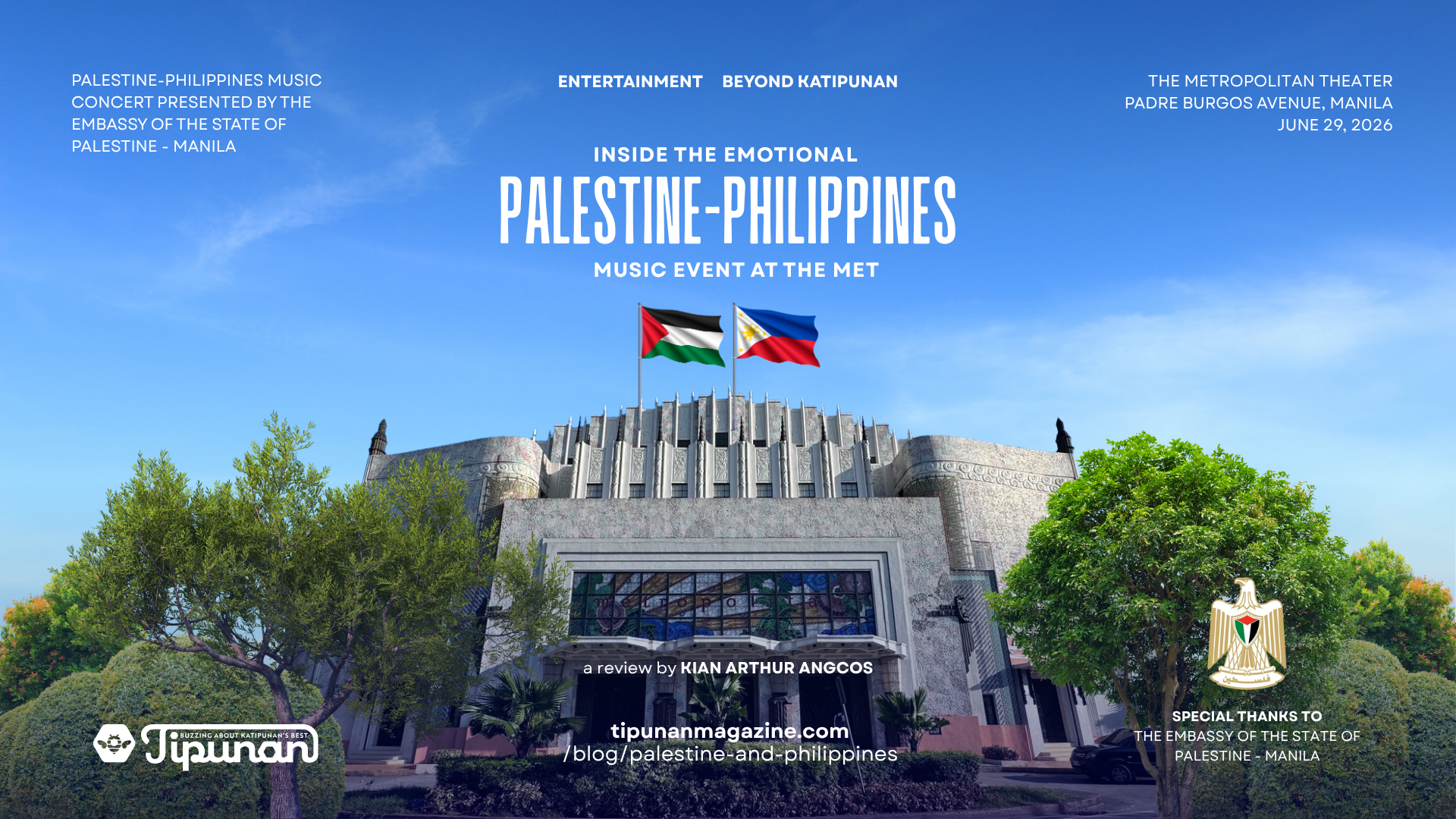
The Embassy of the State of Palestine – Manila proudly presents the Palestine-Philippines Music Concert at the Metropolitan Theater.
Manila, Philippines — The historic Metropolitan Theater became a bridge between two worlds on the evening of June 29, 2026, hosting the profound and evocative Palestine – Philippines Music Concert. Presented by the Embassy of the State of Palestine – Manila, the evening featured a meticulously curated 10-piece repertoire seamlessly blending avant-garde electroacoustic soundscapes, powerful vocal arrangements, and solo piano. It was less of a traditional recital and more of a deeply moving sonic dialogue.
A Diplomat’s Sonic Witness and the Weight of Trauma
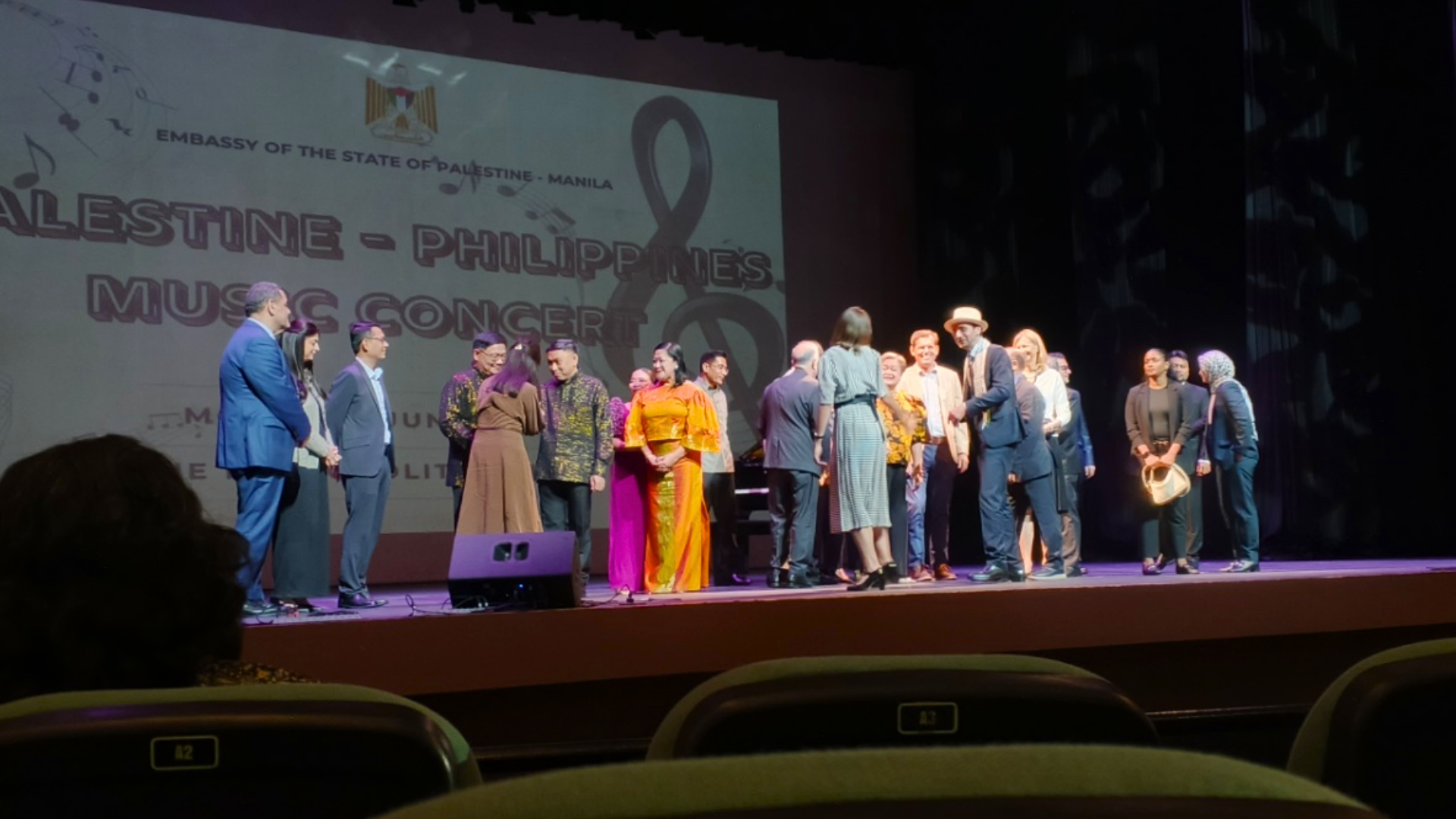
Photo: Kian Arthur Angcos
The evening opened with remarks from His Excellency, Mounir Anastas, the Ambassador of the State of Palestine to the Philippines, who explained that the music was specifically chosen to represent the rich cultural identities of both nations.
In a stunning revelation for the audience, it turned out that Ambassador Anastas himself was the brilliant composer behind the entire first half of the program. He penned all five of the opening contemporary pieces, establishing a powerful narrative arc:
Funeral Sentence: A Musical Plea against the Death Penalty (Acousmatic Music addressing Israel’s recently passed Death Penalty Law applying exclusively to Palestinians)
Reflection (Performed by percussionists Elizalde Tolentino and Aimee Dela Cruz)
Requiem for Gaza (Acousmatic Music tribute to Gaza in the aftermath of mass bombing)
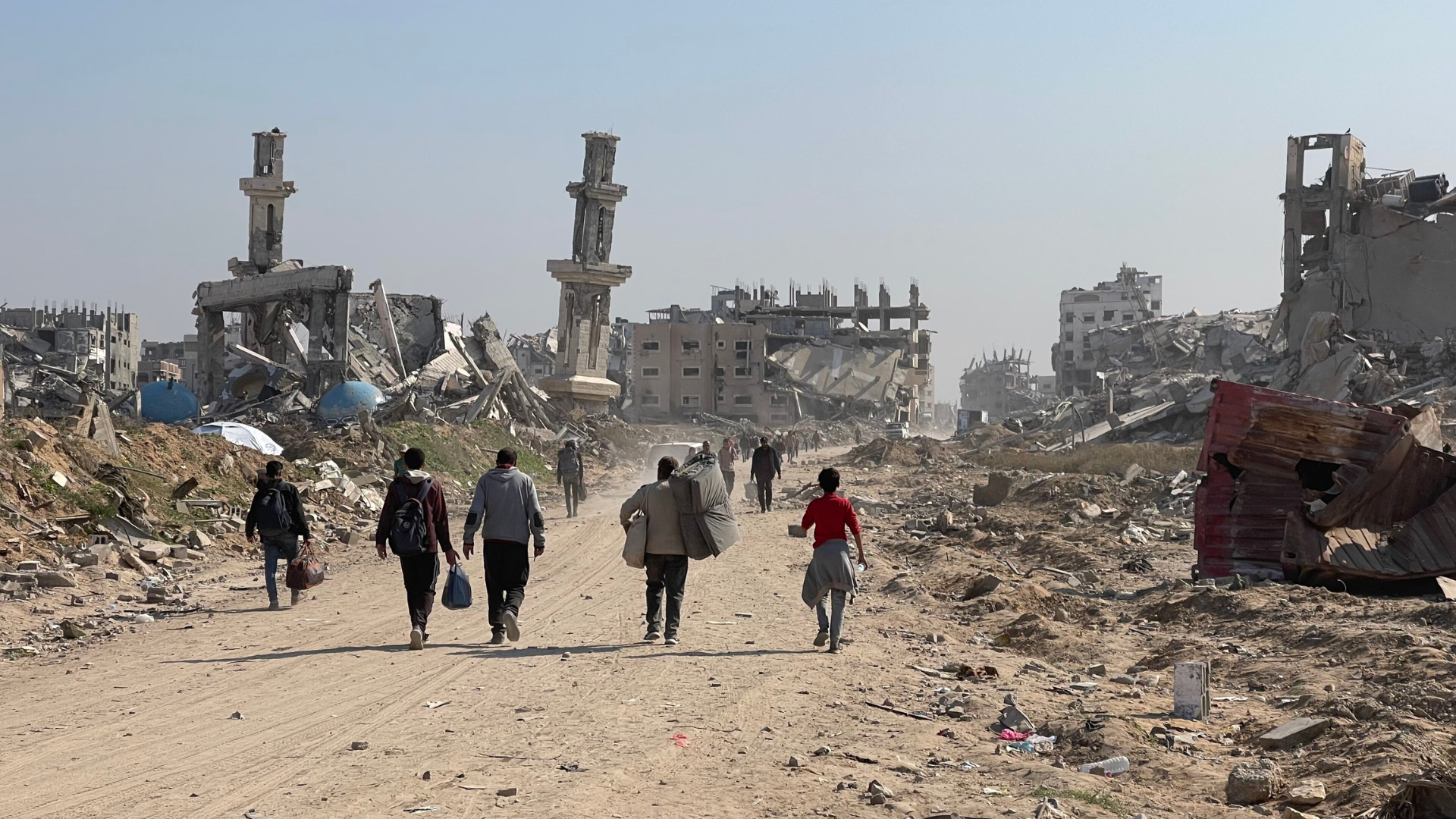
Photo: Jaber Jehad Badwan
Small Étude for Peace (Piano Solo: Dr. Raul M. Sunico)
Motion of Confidence (Piano Solo: Dr. Raul M. Sunico)
These musical pieces did not shy away from discomfort; they clearly and aggressively conveyed the painful journey of persecution and systemic struggle endured by the people of Palestine.
The works featured unpolished field recordings, sounds of heavy drones, and piercing atmospheres bringing an overwhelming reality into the hall, where the atmosphere grew unbearably heavy with some audience members having physical reactions to the sounds.
During these electroacoustic performances, two children sitting directly in front of me began shouting and crying. Simultaneously, multiple audience members visibly got up and left the hall, not out of disrespect nor as a critique of the performance, but rather as a response to the sheer realism of the soundscapes which seemed to evoke an intense, palpable trauma.
The music ceased to be mere entertainment and transformed into an active, shattering reminder of lived experiences that some in the room simply could not bear to face once more as most of the audience members were Palestinians.
A Dialogue with Filipino Masterpieces
Following the weight of the Ambassador's suites, the second half of the program shifted the spotlight to classic Filipino compositions, offering a moment of collective breath; and a symbolic statement of newfound hope and peace for Palestinians taking refuge in the Philippines. A brilliant lineup of vocal works was performed by sopranos Elisanta Cortes and Thea Perez, and tenors Ronan Ferrer and Eugene De Los Santos. These included Francisco Santiago's “Ano Kaya ang Kapalaran”, Tito Arevalo's “Ikaw ang Mahal Ko”, and Erani Cuenco's “Gaano Ko Ikaw Kamahal”, alongside Antonio J. Molina's legendary “Malikmata”.

Collage from Photo: canva.com
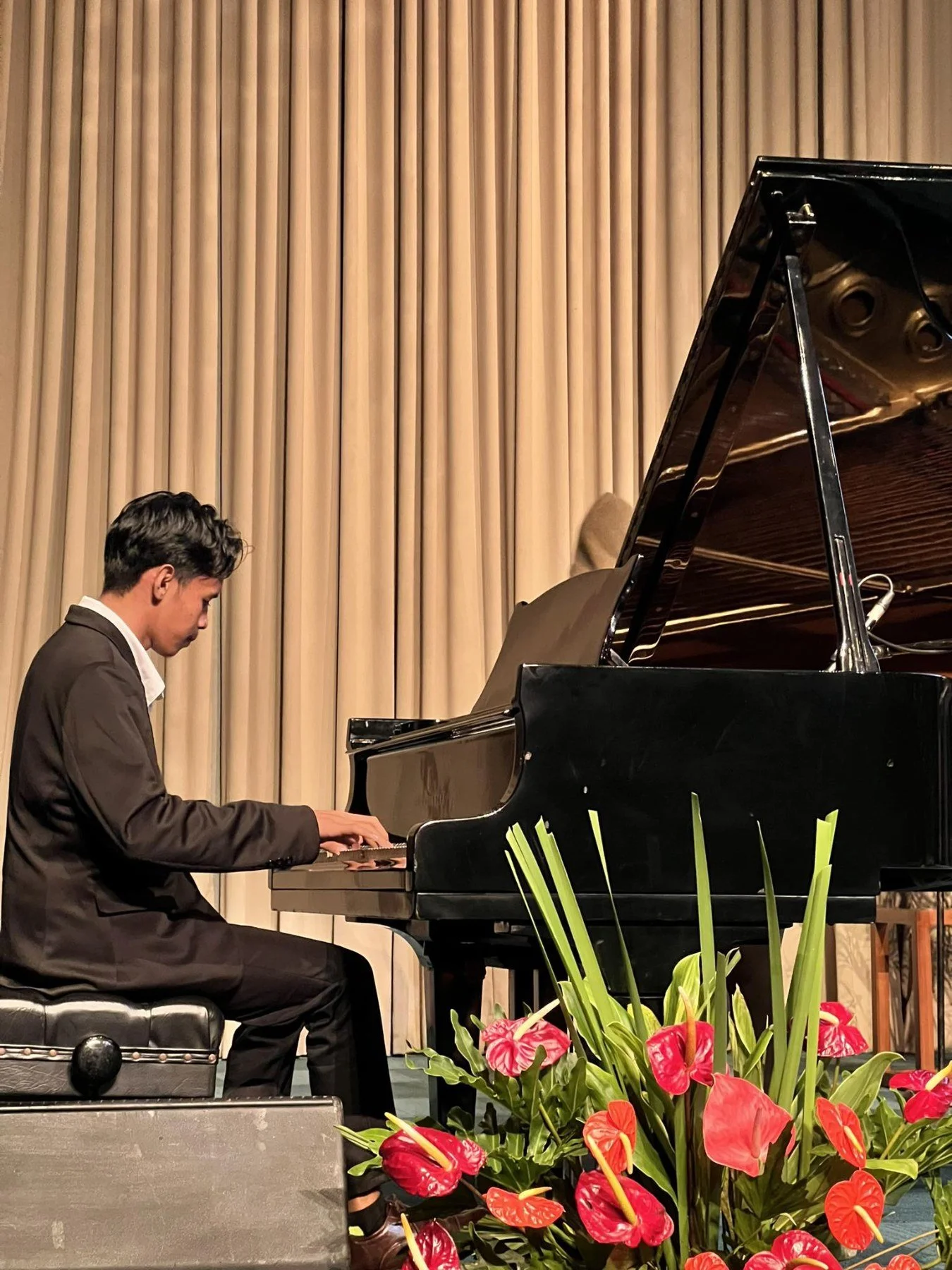
The climax of the evening, however, was the final performance: a brilliant rendition of the “Bahay Kubo”/ “Leron Leron Sinta” piano arrangement by the performer himself, the legendary Dr. Raul M. Sunico. Sunico expertly navigated an arrangement that patterns beloved Filipino folk melodies after the grandiose traditions of Western classical romantic masters like Chopin, Liszt, and Rachmaninoff.
Driven by a desire to understand the mechanics of this spellbinding performance, I recently embarked on a quest to find the sheet music. Unable to find a digital copy online, I tracked down a physical copy at the National Library of the Philippines just a few blocks away. While strict library restrictions meant I wasn't allowed to take a photo, studying the hard copy in person provided a massive contribution.
On paper, the arrangement is written entirely in a bright, traditional major key. What makes the piece feel unexpectedly melancholy and heartbreakingly sad in certain sections isn’t a shift to a minor key at all. Rather, it is Sunico’s virtuosic, dense romantic harmonies, transient chord modulations, and brief chromatic alterations that brilliantly tug at the emotions before resolving back into the familiar folk tunes.
The Verdict
The Palestine – Philippines Music Concert was a masterclass in how art transcends borders, even when that art hurts to hear.
Through the unexpected, unflinching compositional brilliance of Ambassador Mounir Anastas and the breathtaking, romantic virtuosity of Dr. Raul Sunico and the evening’s vocalists, the concert proved that music is not always meant to comfort. Sometimes, its greatest power lies in its ability to force us to bear witness.
Our Deepest Gratitude to the Embassy of the State of Palestine – Manila and His Excellency, Ambassador Mounir Anastas.
About the Author
Kian Arthur Angcos
Kian Arthur Angcos is a Filipino music writer, concert reviewer, and music educator dedicated to chronicling the vibrant classical and orchestral music scene in the Philippines. Combining his deep music insight with a musician’s sharp ear, Kian provides readers with a front-row seat to the country's most significant symphonic events.
His writing spans from deep-dive critiques of traditional masterpieces like Mozart and Mahler to reviews of boundary-pushing crossover concerts, including symphonic pop tributes and video game music events.
Beyond that, Kian is an active force in the local musical community. He has directed collaborative youth and church ensembles—such as the Pasay District Symphony and Banda Kalayaan 1901—and creates custom orchestral arrangements that bridge classical traditions with contemporary pop.
Through his contributions, Kian aims to make orchestral music accessible, engaging, and deeply appreciated by modern audiences.
Find him on Medium: https://medium.com/@kianarthur
OTHER BLOG POSTS


The Philippines marks Museums and Galleries Month this October, the national celebration will open in Quezon City. The kick-off ceremony takes place on October 6 at the House of Representatives in the Batasan complex. The exhibit “Unified Spectrums,” presented in partnership with The House, accompanies the opening.